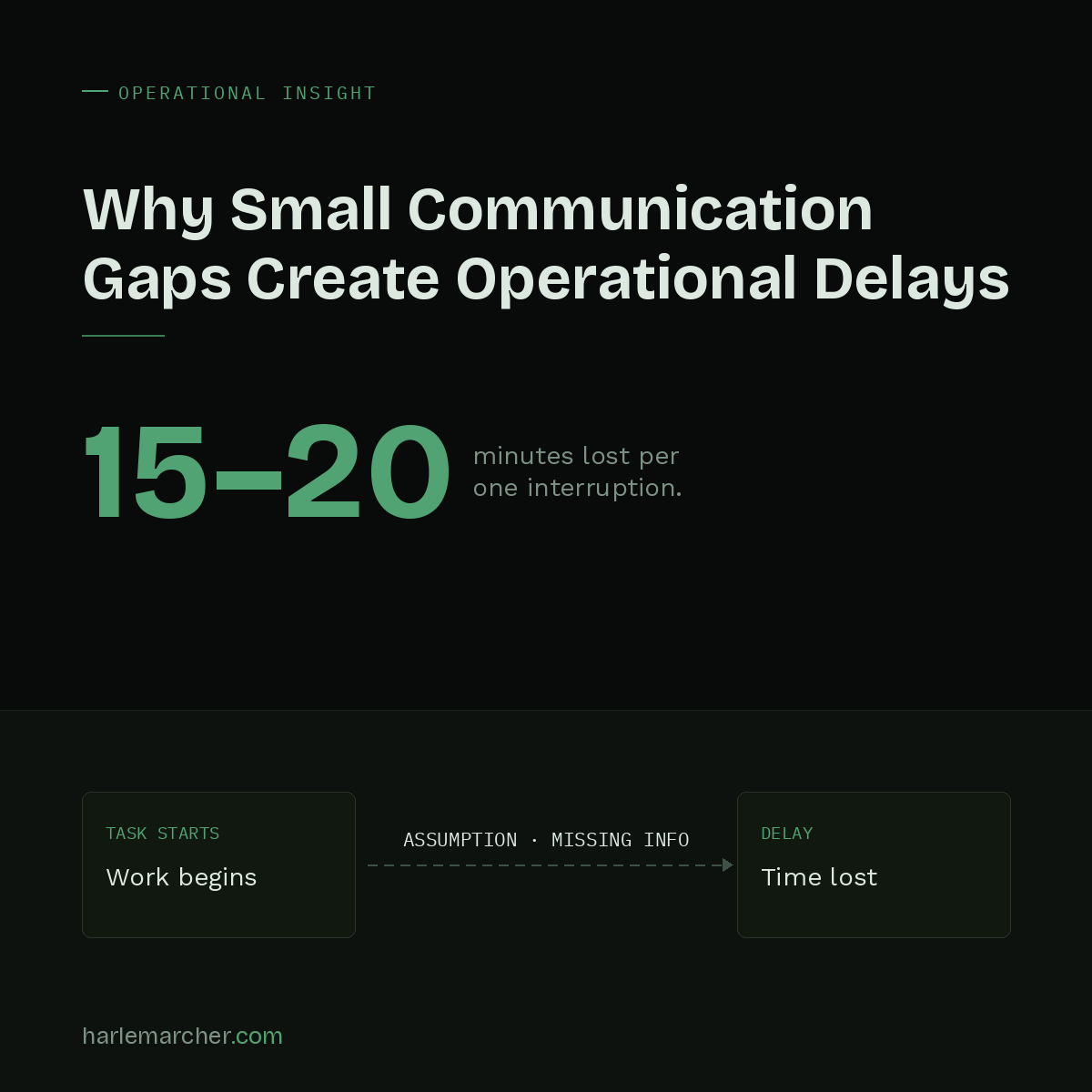
Operational delays are often blamed on complex projects, staff shortages or unexpected problems. In reality, many delays begin with something much simpler: incomplete communication.
A team member assumes everyone has the same information. Another person starts work without confirming the requirements. Someone else has to interrupt their own task to resolve a problem that could have been avoided with a short conversation.
The result may only be fifteen or twenty minutes. However, when similar interruptions happen every day across multiple teams, they become hours of lost productivity every week.
This is one of the reasons why workflow improvement is not only about automation. It is also about designing clear operational processes that reduce unnecessary interruptions, improve communication and ensure everyone has the information they need before work begins.
Many businesses focus on fixing problems after they appear. Well-designed workflows prevent those problems from appearing in the first place.
Operational efficiency starts with clear processes. Automation simply makes those processes faster, more consistent and easier to manage.